Meetha Paan › Blogs › Culture
The Story of Paan in India: From Tambula to Ready-to-Eat Meetha Paan
By the Nature’s Trunk team · Published 10 October 2026 · Updated 10 October 2026 · 4 min read
Quick answer
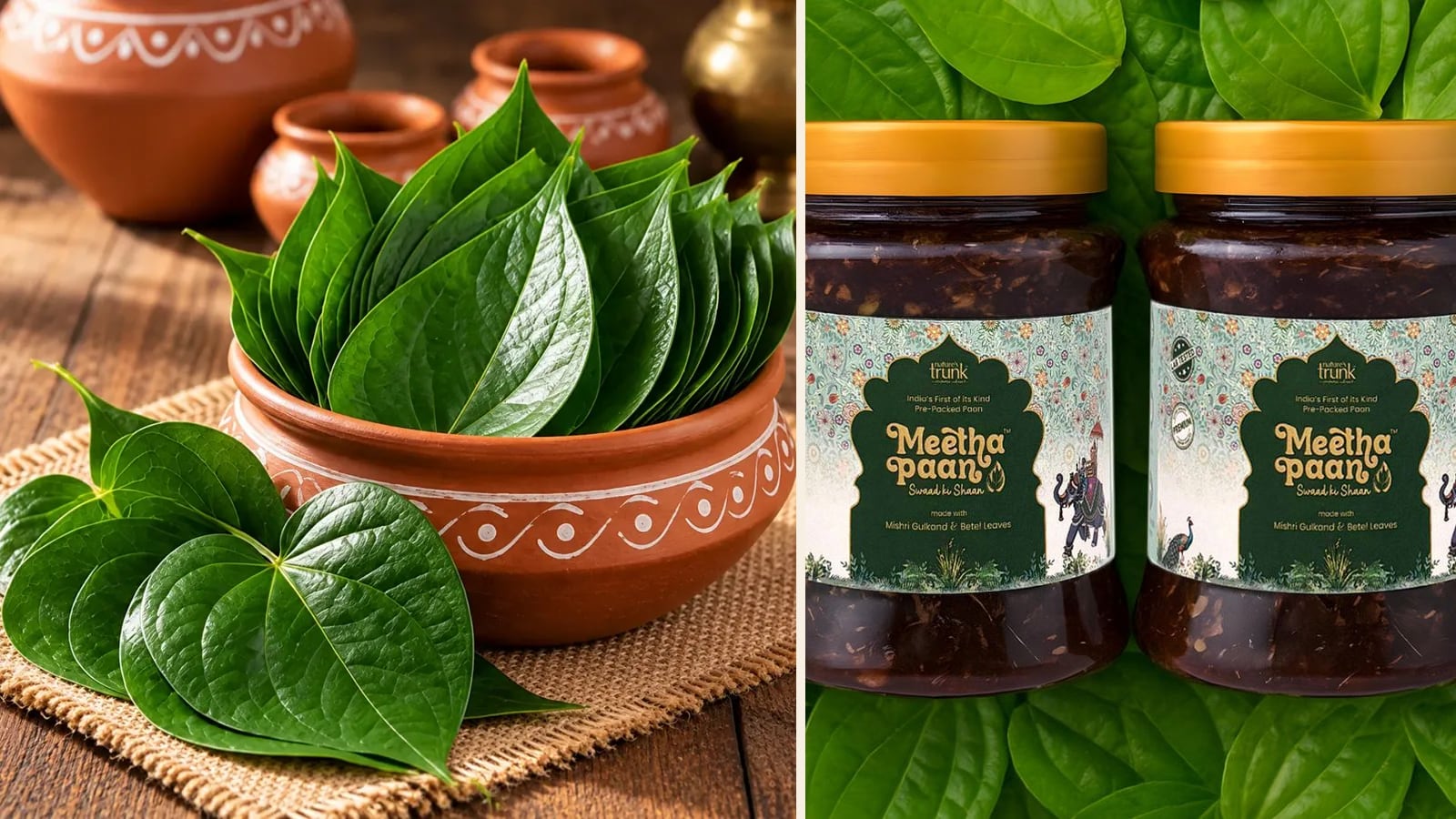
Paan, a betel leaf folded around fillings, has been chewed in India since ancient times and is offered after meals and to guests as a sign of hospitality. Its Sanskrit name, tambula, survives in Hindi as tambuli. Over time paan split into sweet (meetha) and tobacco (tambaku) styles; Meetha Paan is the sweet, Gulkand-filled version, now also made chuna-free, tobacco-free and pre-packed.
Key takeaways
- Paan originated in India in ancient times and spread across Asia.
- The Sanskrit word tambula lives on in Hindi as tambuli; Marco Polo described Indians chewing ‘tembul’ in 1298.
- Banarasi paan from Varanasi received a Geographical Indication (GI) tag in 2023.
- Meetha Paan keeps the sweet side of the tradition, and modern versions leave out chuna and tobacco.
An ancient after-meal custom
Chewing the leaf of the betel vine, Piper betle, with fillings is one of India’s oldest food customs. Encyclopaedia Britannica notes that the habit dates to ancient times and began in India before spreading to other Asian countries.
The World Health Organization’s cancer agency, in its monograph on the habit, records that the Sanskrit name for the betel leaf, tambula, persists in modern Hindi as tambuli, and that Marco Polo wrote in 1298 that the people of India kept a leaf he called ‘tembul’ in their mouths (IARC Monographs, Vol. 85).
Paan as hospitality
For centuries, offering paan has meant welcome. It ends a feast, seals a celebration and is placed before guests at weddings, festivals and religious ceremonies. Families kept an ornate paandan, a box with compartments for leaves and fillings, and serving paan after dinner became a ritual of its own.
That ritual is why the paan counter is still one of the busiest corners at an Indian wedding today. Our wedding guide shows how to recreate it without a live stall.
Banaras and the famous leaf
Varanasi (Banaras) is so closely linked with paan that “Banarasi paan” is famous across India. In 2023 Banarasi paan received a Geographical Indication (GI) tag from the GI Registry in Chennai, recognising qualities tied to its place of origin (Business Today).
Nature’s Trunk Meetha Paan uses Banarasi betel leaves, sorted, finely chopped and pot-roasted before they are mixed into the blend.
Sweet paan and tobacco paan
As paan spread, paan shops developed many styles. Britannica distinguishes meetha (sweet) paan from tambaku (tobacco) paan, which contains chewing tobacco. A classic shop paan is assembled to order on a leaf smeared with chuna (slaked lime), with areca nut and often katha.
Meetha Paan took the sweet road. Its heart is Gulkand, a rose-petal preserve traditionally made by sun-cooking petals with sugar (ICAR-CIPHET), with fennel, seeds, dates and other sweet and aromatic fillings.
Why paan changed: chuna-free and tobacco-free
Modern paan lovers increasingly want the flavour without the lime and tobacco. India’s food rules now say tobacco and nicotine shall not be used as ingredients in any food product (regulation 2.3.4 of the Food Safety and Standards (Prohibition and Restrictions on Sales) Regulations, 2011, FSSAI), and many families prefer a paan that children above 8 and grandparents can share.
Areca nut (supari) has always been part of paan. Our recipe includes thin-cut kadi supari, which we list clearly so you can decide for yourself; read chuna-free and tobacco-free explained for the details.
From paan shop to pantry
A fresh paan is meant to be eaten within minutes. The newest chapter of the story is the ready-to-eat blend: the same leaf, Gulkand and seeds, finely chopped and packed so the after-meal ritual can live in a kitchen cupboard, an office drawer or a wedding carton.
That is what Meetha Paan by Nature’s Trunk sets out to do: keep the taste and hospitality of a sweet paan, and make it as easy as opening a jar or a pocket pack.
Frequently asked questions
Where did paan originate?
Paan originated in India in ancient times and later became popular in other Asian countries, according to Encyclopaedia Britannica.
What is the Sanskrit word for paan?
Tambula. It survives in modern Hindi as tambuli.
Does Banarasi paan have a GI tag?
Yes. Banarasi paan from Varanasi received a Geographical Indication (GI) tag in 2023.
What is the difference between meetha paan and tambaku paan?
Meetha paan is the sweet style, filled with Gulkand and sweet, aromatic ingredients. Tambaku paan contains chewing tobacco. Nature’s Trunk Meetha Paan contains no tobacco and no chuna.
Sources and further reading
- Paan — Encyclopaedia Britannica
- IARC Monographs Vol. 85: Betel-quid and Areca-nut Chewing and Some Areca-nut-derived Nitrosamines (2004) — International Agency for Research on Cancer (WHO)
- Banarasi Langda mango, Banarasi paan are latest entrants to GI tag club — Business Today
- Rose Petal Jam (on traditional Gulkand) — ICAR–Central Institute of Post-Harvest Engineering and Technology
- Food Safety and Standards (Prohibition and Restrictions on Sales) Regulations, 2011 — compendium — Food Safety and Standards Authority of India (FSSAI)
Shop the packs
- Classic Meetha Paan Jar: 350 g / 800 g, from ₹336
- Mini Pocket Pack: 4 × 20 g, from ₹126
- Bulk Meetha Paan Pack: 600 pcs (12 boxes × 50 pcs × 10 g), from ₹5,700
Keep reading
- What Is Meetha Paan? A Complete Guide to Sweet Paan
- Meetha Paan vs Mukhwas vs Saunf: Choosing an After-Meal Mouth Freshener
- Meetha Paan for Weddings and Events: How Much to Order and How to Serve It
Meetha Paan home · Bulk & event orders · Shipping · Returns & refunds · About us · Contact