Betel Leaves
Banarasi paan, prepared one small piece at a time.
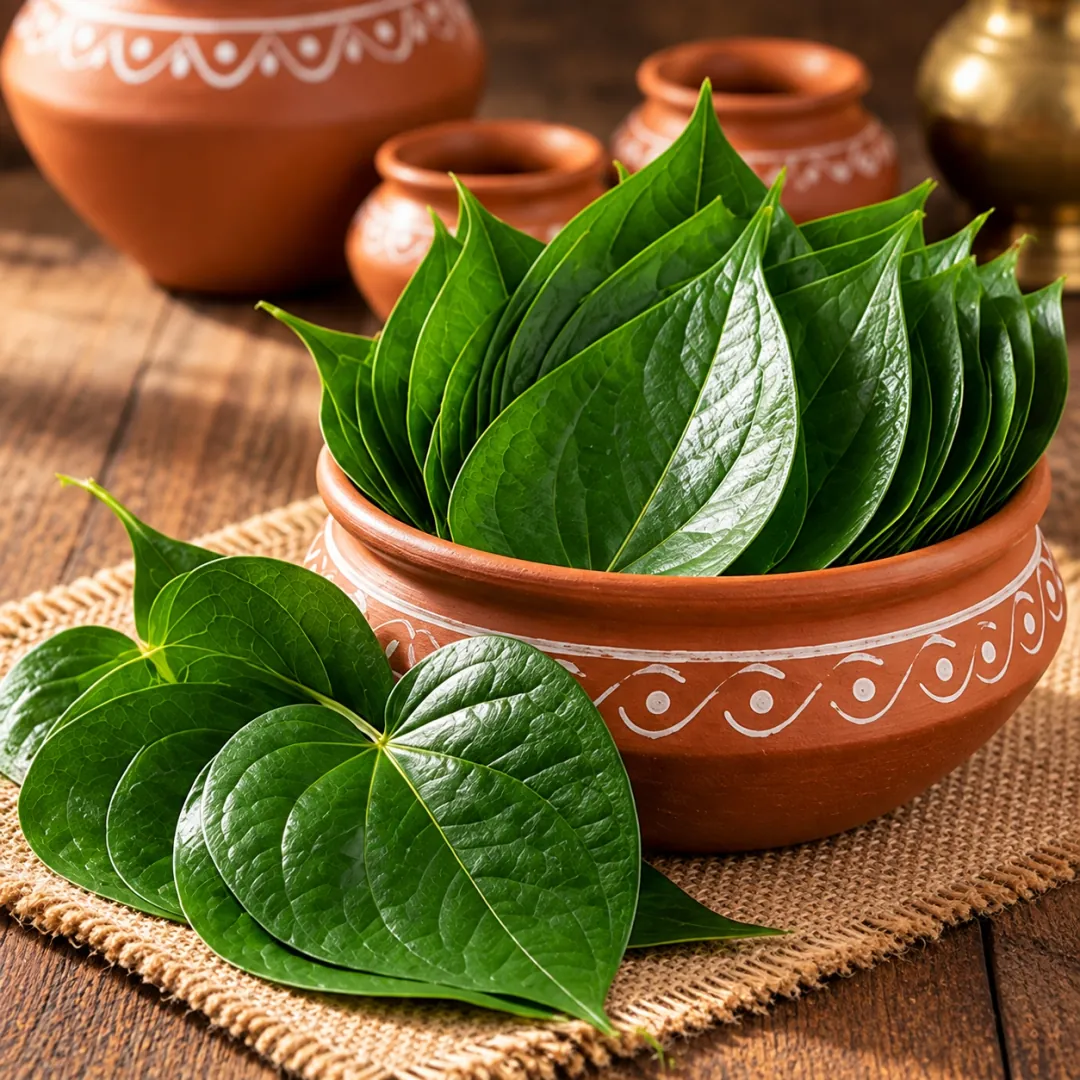
Before the sweetness, there is the leaf. We use Banarasi betel leaves for the familiar paan character that carries through every mouthful, even when the recipe is enjoyed from a jar or a small pocket pack.
- Banarasi betel leaves
- Sorted and finely chopped
- Pot-roasted before blending
The flavour that makes it paan
Betel leaf gives our blend its green, aromatic foundation. Gulkand brings the rose sweetness, but the leaf is what makes the pairing recognisably paan. Banarasi leaves are our choice for this part of the recipe, giving the story a clear starting point.
Sorting before chopping
We sort the leaves, then chop them finely. That preparation matters to how the blend eats: small pieces mingle with the gulkand rather than sitting apart as large leaves. It is a simple detail that shapes the texture of every portion.
From leaf to finished blend
The betel leaves are part of our pot-roasted ingredients. They are then mixed with the gulkand, alongside the seeds, dates and spice notes. We leave gulkand and mint out of the pot-roasting step so the finished blend brings those distinct preparations together.
A little ingredient knowledge
Betel leaves are the leaves used in paan. They are a different ingredient from betel nut, also called areca nut or supari.
Taste it in every pack of Meetha Paan by Nature’s Trunk: Classic Meetha Paan Jar, Family Multi Pack, Pocket Friendly Meetha Paan, Mini Pocket Pack, Pocket Value Multi Pack, Party Pack, Premium Party Pack, Bulk Meetha Paan Pack.