Dhaga Mishri
The rock-sugar sweetness inside our gulkand.
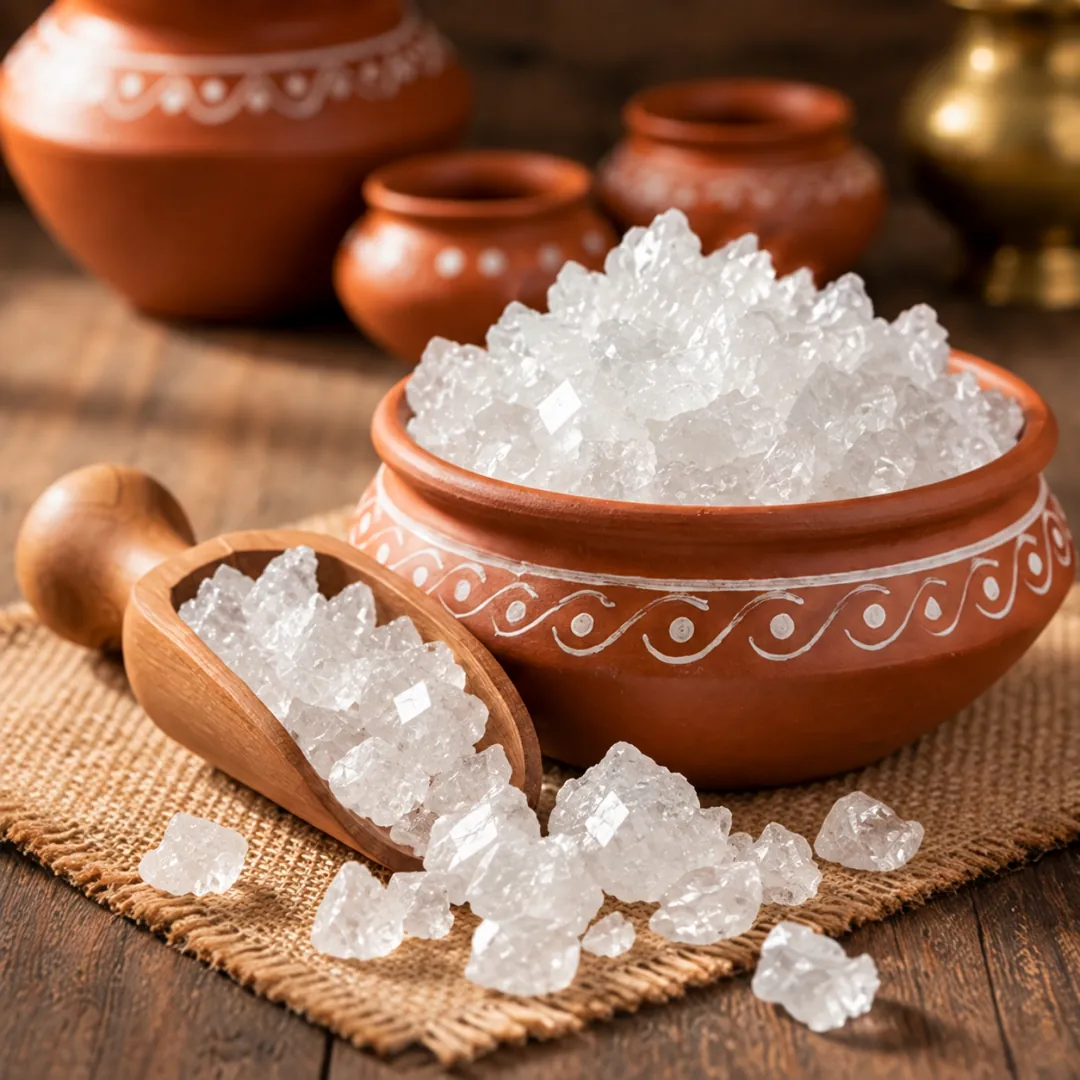
The sweetness at the centre of our recipe begins with the gulkand. We use dhaga mishri in its preparation, bringing this traditional form of rock sugar together with Damask rose petals through sun-cooking.
- Dhaga mishri, a form of rock sugar
- Used to sweeten the gulkand
- In place of granulated sugar
A choice within the preserve
Dhaga mishri is part of our gulkand story. It supplies the sweetness that accompanies the rose petals, forming the preserve that holds the paan blend together. We describe this choice plainly because the kind of sweetener is a useful detail to know.
Brought together with roses
Our gulkand is sun-cooked with dhaga mishri rather than granulated sugar. The resulting preserve is kept out of the pot-roasting step. It meets the prepared leaves, seeds and dry dates when the blend is brought together.
Knowing what the name means
Mishri is rock sugar; dhaga refers to the thread associated with this form of crystallised sugar. It is a traditional ingredient choice with a specific place in the recipe. It is still sugar, so the choice does not make the gulkand sugar-free.
A little ingredient knowledge
The sweetness of our gulkand comes from dhaga mishri. Rock sugar is crystallised sugar: its traditional form and name describe the ingredient, rather than a sugar-free alternative.
Taste it in every pack of Meetha Paan by Nature’s Trunk: Classic Meetha Paan Jar, Family Multi Pack, Pocket Friendly Meetha Paan, Mini Pocket Pack, Pocket Value Multi Pack, Party Pack, Premium Party Pack, Bulk Meetha Paan Pack.